I write about the three topics that I am most passionate about; Sales, Marketing and Social Media. These topics are covered from my experiences in outside sales and marketing. My objective is to use my expertise to help business and the individual.
Salesforce Launches Agentforce Operations to End Back-Office Bottlenecks
I covered Salesforce Agentforce in New York this past month. This event was organized to showcase Salesforce’s Agentforce. Agentforce is DIY AI in action. Agentforce is a customer service agent built by Salesforce customers and integrated across industries and across the customer journey.
In the keynote, Patrick Stokes, President and CMO, Salesforce, announced the launch of Agentforce Operations.
Agentforce Operations uses AI to turn manual and outdated back-office processes into clear tasks so that Agents can do the work instead of humans. Agentforce Operations can automate tasks such as process coordination, data verification, ensuring compliance, obtaining approvals, and more.
Using Agentforce Operations pays big dividends with cycle times reduced by 50 to 70 percent, improved accuracy, and manual data entry cut by 80 percent. This leads to better outcomes and experiences. With Agentforce Operations, Agents complete work beyond organizing tasks for completion.
Salesforce also announced the creation of a Slack workspace and Slackbot, which is being offered free to every new Salesforce customer. Sales and Service Teams can use AI and Apps across their tech stack, moving from Slack to Microsoft Teams, Gmail, and more, to increase their productivity. Slackbots can turn customer conversations into records, capturing updates and keeping data current.
I saw demos for use cases across industry verticals and the customer journey in Sales, Service, and Marketing functions with Canada Goose, Engine, and Dell.
Leah McGowen-Hare, SVP at Salesforce , Demos How Canada Goose is an Agentic Retailer using Salesforce and Data 360
Rob Seaman, SVP & GM Slack shows how Engine became an Agentic Travel Company using Salesforce
MaryAnn Patel SVP, at @salesforce , shares how Dell is an Agentic Enterprise W/Agentforce Operations
There were panel discussions, and leaders discussed Agentforce Operations. Panelists also shared how they would like Agentforce and DIY AI to evolve to improve productivity and outcomes.
Hayley Advokat, MPS, Head of AI Product & Executive Communications at Salesforce, led the Agentforce Operations Deep Dive with Sanjna Parulekar, SVP of Product Marketing at Salesforce.
Maha Neouchy, Director of Communications at Salesforce, moderated the panel discussion with Muddu Sudhakar, SVP and GM of Salesforce IT Service and HR Service, and CEO of Cornerstone OnDemand, who discussed how Salesforce is transforming front-office operations in HR and IT, improving the employee experience with Slack and Teams.
I built AI Agents with Agentforce, Vibes, and Claude Code, using them to start building Sales and Marketing analytics and strategy.
Agentforce Tour was a great event. I learned a lot about AI Agents, DIY AI, and how it can transform the worker and customer experience.
If you want to be on the cutting edge of DIY AI, attend Agentforce in your city.
I write about the three topics that I am most passionate about; Sales, Marketing and Social Media. These topics are covered from my experiences in outside sales and marketing. My objective is to use my expertise to help business and the individual.
During my time in field sales, I wanted to obtain the business of Dental Schools and Hospitals. After obtaining meetings and making presentations to prominent Dentists, I was informed that they could not buy from me. After handling objections, showing how my offerings were better than the competition, I found out why. The decision-makers explained that they were under contract with large manufacturers and distributors.
These competitors offered deep discounts to Dental Schools so their students would get comfortable using their products. When students would become licensed Dentists, they would use the products they trained on instead of the competitors. These competitors built lifelong customer loyalty.
When I called on certain Dentists, they said they liked a particular company’s product. I asked them why they liked the product and would they consider switching for something comparable with faster service. The Dentists said no saying that they learned on particular equipment in Dental School and it was the only thing they felt comfortable using.
The Technology Life Cycle
Geoffrey Moore discusses the Technology life cycle in Crossing the Chasm.
Dental manufactures and large distributors used pricing to target the Innovators/Early adopters/which in this case was the dental students and hospitals. To increase market share, they offered discounted pricing in exchange for purchase and long service contracts. These manufacturers and distributors succeeded in targeting dental students right before they would become customers; earning them years of customer loyalty.
Here is how this SAAS marketing program could be executed on the Technology Life cycle curve.
Innovators Preparation programs
Offer Preparation programs discounted pricing and free trials to try the product.
Have Pre-service Professionals get comfortable using the product.
Early Adopters Early Career Professionals
Offer them free trials and a lower discount.
Early/Late Majority Seasoned Professionals
Offer Trials and discounts to targeted staff and managers
Laggards Senior Staff Members
Continue to innovate the product and messaging to show how the product is being used.
Obtain Testimonials from satisfied staff and managers.
Show how the product exceeds competitors.
When appropriate, offer free and discounted trials to all appropriate prospects.
This is how Tech companies can improve their market share and generate life-long customer loyalty.
Tech Companies have the chance to improve business and generate life-long customer loyalty. This opportunity can be seized by offering discounted pricing and free trials to Innovators/Early Adopters which in this case are the preparation programs.
What Tech product do you want to try?
Comment and share below.
Additional Market Research Why & How People Buy Tech
When marketing and selling a tech product or service, it is important to ask two questions to understand your buyers.
1. What motivates people to buy a tech product or service?
2. How do people find a tech product or service to buy?
I surveyed my LinkedIn audience for answers.
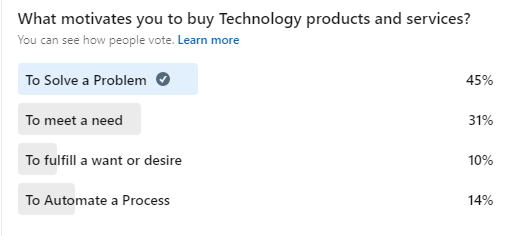
1. What motivates people to buy a tech product or service?
People buy a technology product or service for many reasons.
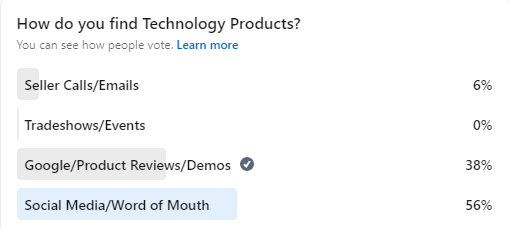
2. How do people find a tech product or service to buy?
People find and buy technology products or services in different ways.
These findings suggest businesses need to create customer-centric offerings to survive in a competitive marketplace. Answering these questions will help businesses develop, create and, position offerings people want to purchase. I
Why & How People Buy
When marketing and selling a product or service, it is important to ask two questions to understand your buyers.
1. What motivates people to buy a product or service?
2. How do people find a product or service to buy?
I surveyed my LinkedIn audience for answers.
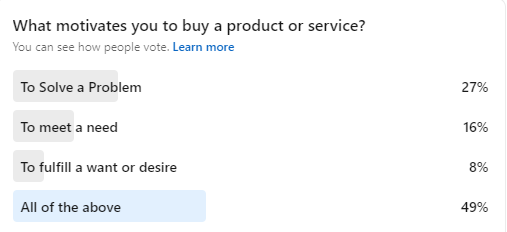
1. What motivates people to buy a product or service?
People buy a product or service for many reasons.
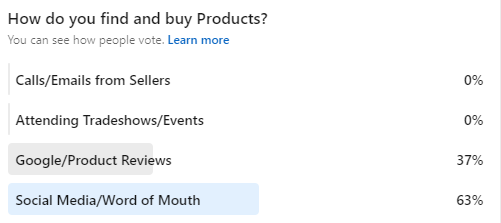
2. How do people find a product or service to buy?
People find and buy products or services in different ways.
These findings suggest businesses need to create customer-centric offerings to survive in a competitive marketplace.
Answering these questions will help businesses develop, create and, position offerings people want to purchase.
About Me
I’m a Strategic Marketer with Field Sales, Sales Enablement, Content Creation and, Classroom Teacher/Trainer skill-sets using Marketing to drive Sales/Growth.
As a Marketer, I’ve worked with Start-Ups, a Political Campaign, and a Digital Marketing Conference.
I’m certified in Inbound Marketing with classes in Marketing, Product Management, Product Marketing, SEO, SEM.
Before teaching, I was an Outside Sales and Marketing Rep. selling and marketing dental products to Dentists using consultative selling, trade show marketing, field marketing, and market research.
I publish Sales, Marketing & Social Media Today a blog covering industry events and trends.
Articles and insights have been featured, mentioned and, referenced in:
•SlideShare for being in the top 5% of profiles viewed in 2014
•LinkedIn Profile was in the top 1% of profiles viewed out of 200 million members in 2012
I’m seeking a full-time role in:
Inbound Marketing, Digital Marketing, Content Marketing, Product Marketing, Demand Generation, Social Media Marketing, Sales Enablement Enablement, Sales Strategy, Marketing Strategy, Employer Branding, Recruitment Marketing.
Open on title, industry, company, location, and level. Reach out on LinkedIn or at dan@dangalante.com to start a conversation.
Posted 242 weeks ago
Sales, Marketing & Social Media Today
I write about the three topics that I am most passionate about; Sales, Marketing and Social Media. These topics are covered from my experiences in outside sales and marketing. My objective is to use my expertise to help business and the individual.
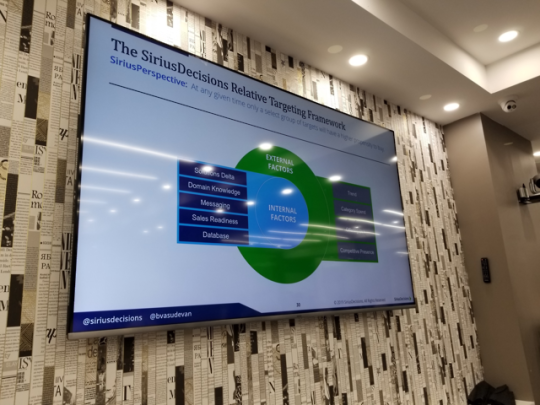
Only certain target customers will buy due to internal and external factors.
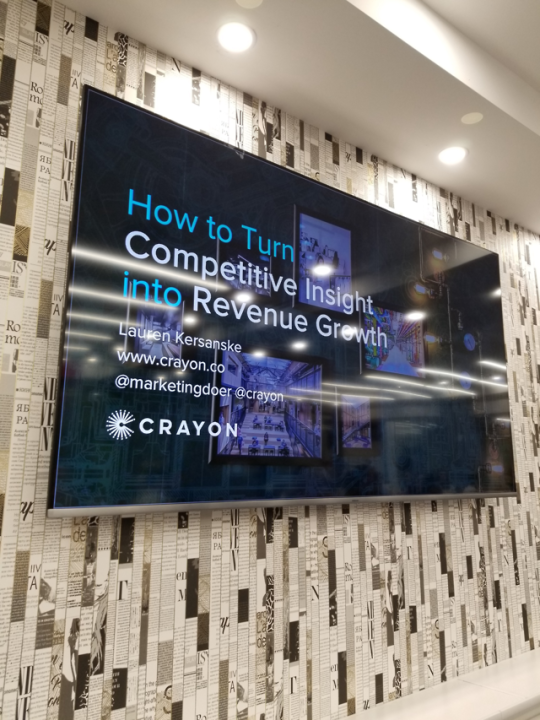
To grow revenue, businesses need to develop and use better competitive insights. Developing these insights entails examining everything about the competition to identify: strengths, weaknesses, competitor priorities, growing, and under-served markets.
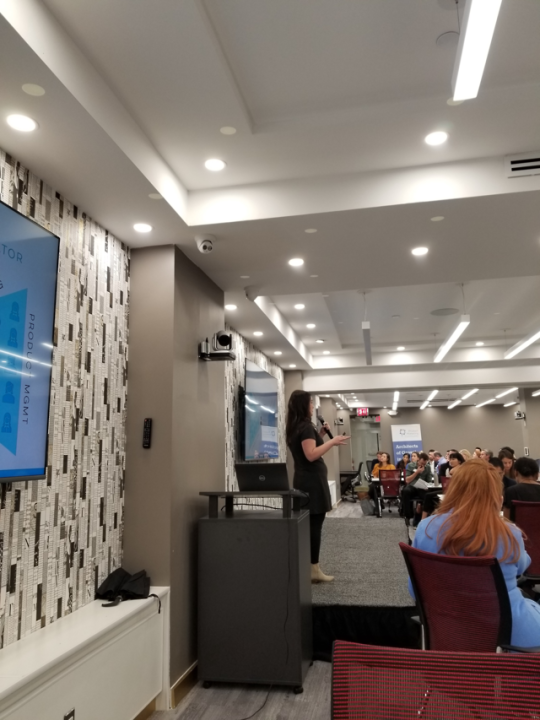
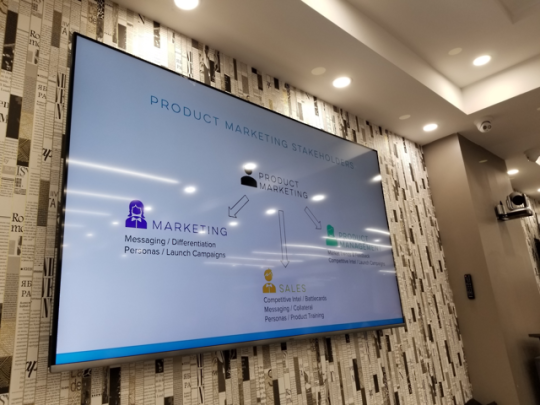
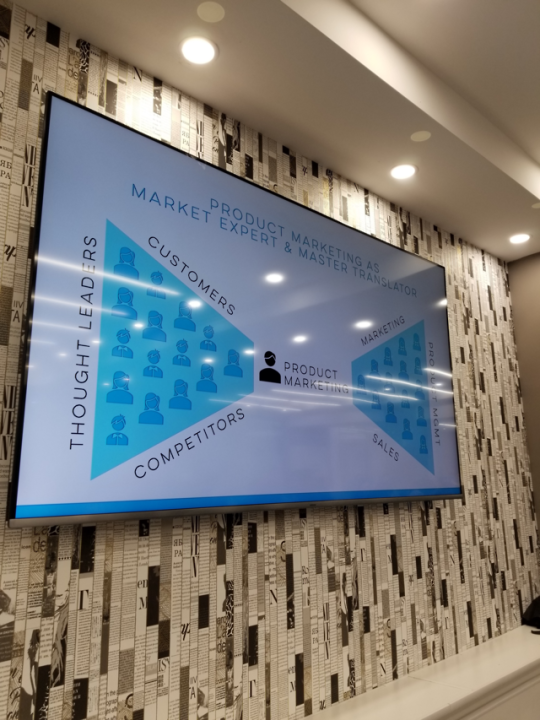
Product Marketing involves more than Marketing and Product Team support. Product Marketers serve Marketing, Sales, and Product teams. Each team has different needs and responsibilities. However, they all grow the business and serve customers.
Product Marketers serve as market experts and translators for teams from across the organization.
What is Product Marketing?
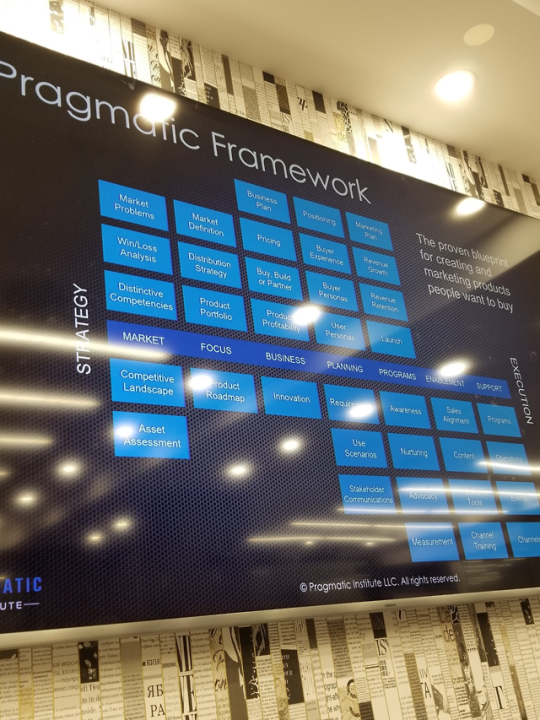
Product Marketing is the discipline of bringing a product to market and nurturing its success. Businesses need to create and market products people want to buy. To do that, they need to use the Pragmatic Framework.
Product Marketers are taking on some Product Manager responsibilities
Here are nine things to address in a Product Marketing Brief.
What does your company do? Does your product offering align with your business goals?
What are the features of your product? Do others understand what you are building and why?
Does this Product address gaps in the Market? Include an overview of a Competitive, win-loss and, SWOT analysis.
Who is your ideal customer or target market? Include an overview of findings of demographic, psychographic, and buyer persona research. Does your product solve customer pain points?
How will you measure product success?
What are can go wrong? Can failure be anticipated and corrected?
What is the roadmap and schedule of the product? Who’s responsible and in charge?
Who needs to be included in the project and who needs to approve deliverables?
How will goals be tracked? How often will they be monitored? What insights are you trying to glean from the data?
Johnathan Hinz of Seismeic shares his insights on sales enablement and its role in marketing.
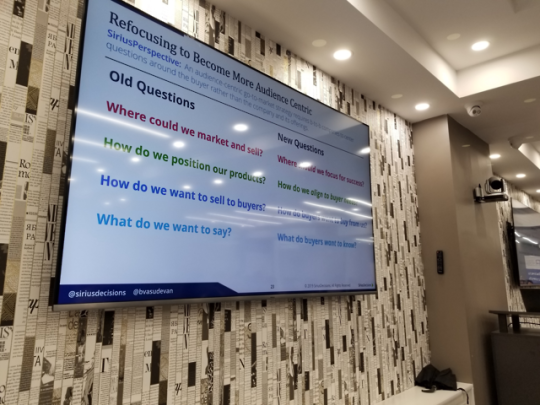
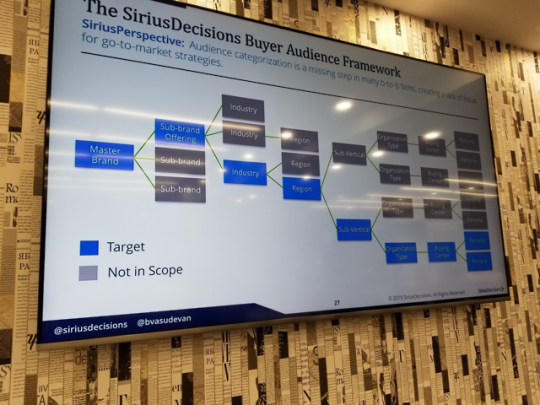
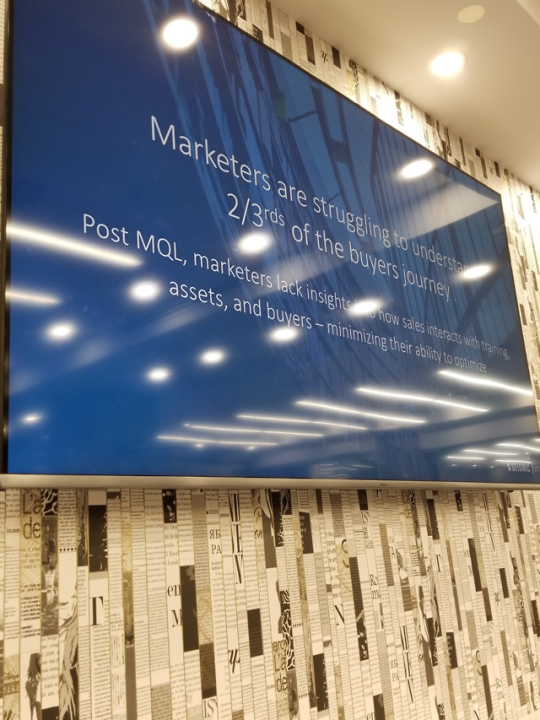
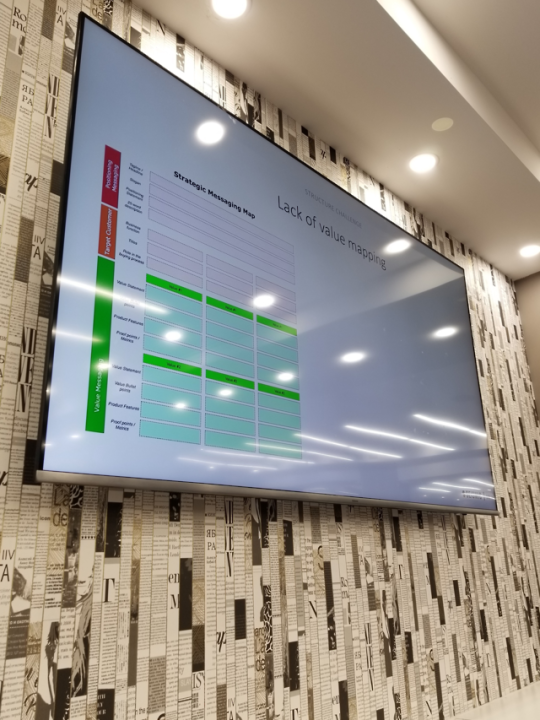
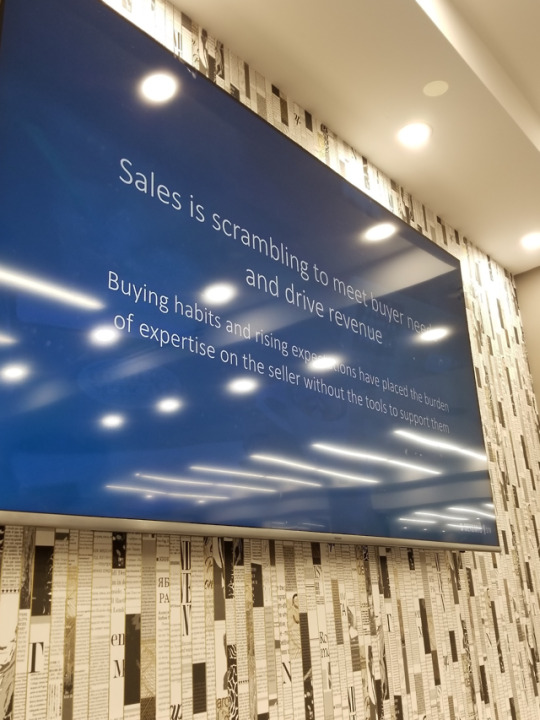
The lack of Sales and Marketing alignment is due in part to the inadequate amount of customer value mapping relating to the number of buyer types.
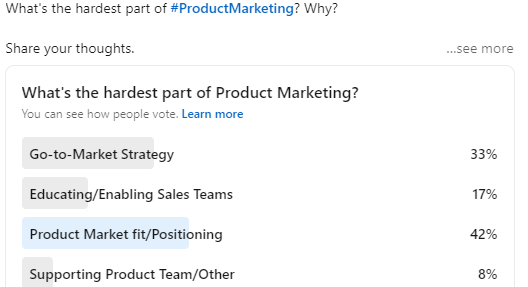
Product Marketers, what’s the hardest part of your job?