Sales, Marketing & Social Media Today

I write about the three topics that I am most passionate about; Sales, Marketing and Social Media. These topics are covered from my experiences in outside sales and marketing. My objective is to use my expertise to help business and the individual.

Trends in the US Auto Industry: Key Insights from the 2026 Auto Forum New York

I covered the Automotive Forum New York, the day before the New York International Auto Show. This event connects Automotive thought leaders with Manufacturers and Dealers. Attendees learned about trends and insights in the Automotive industry that focus on the dealer side of the business.

The auto forum started with an economist who analyzed the US Economy as a whole, followed by Thomas King, President, Data & Analytics Division, Chief Product Officer at JD Power, who analyzed the US auto industry, addressing the issue of disappearing EV Tax credits, a surge in lease returns that will reshape the inventory and demand planning. Thomas also addressed the issue of softening trade equity and the rise of subprime lending.

The State of the Automotive Industry

Thomas shared some interesting statistics and analysis. 

The total and retail vehicle Sales in the US for the first quarter are 3.7 million, down from a year ago on a retail basis are 2.9 million or 9% per week.

Vehicles were sold with larger discounts than the previous year at $3300 per unit. This has a negative impact on manufacturer profitability. In terms of new vehicle sales last year, the industry set an all-time high for money spent on vehicles. A great result, but a 7% decline. In terms of retail confidence on a per-unit basis, it was down $50 or $2. Retail volume was $6.1 million, a strong number that was down 10% from a year ago. 

The Automotive Industry is in good shape based on the data.

Prices are rising for vehicles. On average, a new Vehicle costs $46000, up $1000 from last year. Tariffs did not impact pricing because manufacturers absorbed them, as passing the cost to consumers would decrease sales. Manufacturers’ profitability remained stable. Manufacturers are planning to increase Sales and Market share. 

EVs are not driving Sales. With EV incentives gone, consumers are shifting to Gas Vehicles. Manufacturers are shifting back to more gas vehicles to meet consumer demand. 

In terms of lease payments, the average last year was $636 per month, and now it is $650, a modest increase for 36-month leases. With rising lease prices, dealers have a chance to convert lessees to new car buyers with 2.4 million leases ending this year. 13 percent of financed leasing sales are on loans that are 84 months or longer. Subprime lending can help increase sales if it is monitored and controlled. Subprime lending increased in the 1st quarter. 

Trade-ins were a selling point for dealers with the supply constraint back in 2022, with the average price being $29000. Vehicles traded in have lower equity because customers paid above sticker price back in 2022. 

Rising fuel prices will hurt new vehicle sales on leases because, as lease payments go up, the amount spent on gas decreases. However, people whose vehicle costs $46000 on average are less sensitive to rising gas prices. Car buyers who do not lease cars are less affected by rising gas prices. 2.8% percent of income is spent on fuel. 

Lower interest rates will make car buying and leasing less expensive. 

Consumers are on track to spend $623 million on new vehicles. Consumer spending predicted to be at an all-time high. Retailer profits are expected to be $25.4 billion, down from $28.9 million a year ago.

Volume is the same as last year, with the total number being 16.3 million and 13.6 million for retail.

Improving the Customer Experience at Auto Dealerships

A panel discussed how to improve the customer experience. Liza Borches and Rob Cochran shared their insights. The panel suggested being transparent to build customer trust, especially with pricing. Customers want to know how much a car will cost. Transparency also applies to service. Service is a profit center for dealers; this is an opportunity. Currently, there is a shortage of technicians. When customers see a price, they want to know if this is the final price. OEMs can improve the customer experience for customers by listening to and providing customers with what they want based on their needs. 

The panel also shared that dealer must use AI to automate their processes without losing a human touch. 

AI’s Impact on Car Buying

A panel AI in Auto discussed how AI is transforming vehicle buying and dealership operations. Jason Goldberg, GM, Global Client Development, The Trade Desk, Liam Golightley, Vice President, Customer Success, Podium, Jenni Newman, Editor-in-Chief, Cars.com, Brian Abrams, VP, Product Management, CDK, shared their insights. Brian Abrams moderated the panel. 

47 percent of consumers are using AI to date, and 64 percent of consumers use AI in their car shopping journey, but they want a human touch at the dealership, according to Cars.com. 70 percent of consumers are undecided on the make and model of a vehicle, according to Cars.com. AI is shortening the buying process by helping consumers become more informed faster. 67 percent of auto dealers are using AI, and their Business Development Center. AI is transforming the way consumers buy vehicles and how dealerships operate. 

What’s next for OEMs, Dealers, and Manufacturers?

Senator Bernie Moreno, a former car dealer, advised dealers and manufacturers on improving relationships with one another and the US Government in the One on One with Senator Bernie Moreno panel. John Fitzpatrick, CEO, Force Marketing, moderated the discussion. 

He shared about affordability in America. The Senator shared how the administration stopped California from submitting its own set of emissions standards. The goal is to have one set of emission standards to sell more cars abroad. He discussed removing the market distortion that EV mandates imposed on the auto market. EV mandates cost the industry 100 billion dollars. This is money that could have been spent on innovating cars and the industry as a whole. 

Bernie discussed allowing US automakers to collaborate on expensive new technologies to compete with Chinese Automakers. He described having Chinese cars here as a national security issue because they have cameras and would need to be connected to US infrastructure, a big risk.

The Senator discussed making more affordable cars, offering a $25000 car as Honda does. He also discussed service in the dealer franchise model. Dealers and Manufactures need to improve how they handle warranty issues for customers. 

It was a great event with many great panels. I learned a lot about the automotive industry.

I want to thank J.D. Power, NADA, and the New York International Auto Show for having me as their guest.
Posted 7 weeks ago

Sales, Marketing & Social Media Today

I write about the three topics that I am most passionate about; Sales, Marketing and Social Media. These topics are covered from my experiences in outside sales and marketing. My objective is to use my expertise to help business and the individual.

How to use Marketing to Build a Top Talent & Employer Brand

image

Brands use Marketing to increase sales, and revenue, and to beat the competition. While this is a great strategy, a brand is only as good as its talent. Yes, brands compete to get and keep customers; but they are also competing to get and keep great talent. For brands to grow, they need great talent in every function of the business.

According to LinkedIn, “the number of global members who changed their jobs on LinkedIn was up 54% year over year. For context, those numbers typically hover between 0 and 5%. “

For brands to be able to attract top talent, they need to be a desired place to work. To be a desired place to work, they need to understand what motivates their employees. While this will vary by industry and company size there are similar things that many employees seek. These include:

1. Feeling valued for their contributions

2. Freedom to do interesting work and solve intriguing problems

3. Fair and competitive compensation including incentive and performance pay, perks, and other employer benefits

4. A fun place to work with activities to bond with co-workers

5. Training and advancement opportunities

6. Work-Life Balance

7. Flexible-working conditions ie work from home, remote work, hybrid work, or onsite for those who want to be in the office

If these things listed above are in place, brands are on the right track to building a great talented brand provided their product offerings are solid.

Getting employees excited about coming to work each day will increase the talent pool by generating word of mouth. When people have something good they tell their friends.

Beyond the offline word of mouth, Brands need to own their identity online by in-sourcing their online and offline assets. This starts with their websites, digital properties, and the collateral used to sell their offerings. With talent branding and employer branding, brands are selling prospective employees the idea of applying and working for their company. This is similar to marketing their commercial offerings to potential customers.

Brands will need to conduct market research to understand who their competitors are and where they stack up in the talent market. Compensation, company culture, intelligence from applicants.

Information from this research can be used to develop a positioning strategy that can be applied to the talent brand and employer brand.

Every brand should have a career page on its website because this will reduce recruiting costs. This page should include the following:

  1. Pictures of employees from each function with a short bio and why they chose to work at the brand
  2. Employer Benefits and Perks offered
  3. Authentic Stories on Company Culture
  4. An application that is easy to fill out. i.e greenhouse.io or a form with a file for a cover letter and resume Greenhouse can be linked with LinkedIn
  5. Social Sharing buttons for job postings

Company LinkedIn pages

In addition to sales, product, and content marketing, brands should use their LinkedIn page for talent and employer branding. Some companies’ talent and employer branding strategy are to post jobs on LinkedIn hoping candidates will apply. This is a missed opportunity to sell active and passive candidates on why they should work for your company. Today, candidates have many places they can work.

Things to include in a LinkedIn page

  1. Pictures of employees from each function with a short bio and why they chose to work at the brand
  2. Employer Benefits and Perks offered
  3. Stories on company culture
  4. An application that is easy to fill out. i.e greenhouse.io Indeed, Glassdoor, or a form with a file for a cover letter and resume Greenhouse can be linked with LinkedIn.
  5. Social Sharing buttons for job postings

Creating Engaging Job descriptions

The function head, Marketing, and HR need to collaborate to write job descriptions that convince applicants to apply, similar to copy-writing for commercial offerings.

Creating a Great Candidate Experience

Providing candidates with a great recruiting experience is key. Everything should be transparent to candidates. At the end of the recruiting process, it is important to solicit candidate feedback to refine and hone your recruiting process.

New Hire Onboarding and Reducing Turnover

Make sure new hires feel welcome and are trained properly coordinating with the managers and functional heads of each department because roles had different needs and requirements for success.

Empowering and providing incentives to employees

Encourage employees to share company content and jobs on LinkedIn. Also, encourage employee referrals with incentives for referrals that are hired.

If you are not happy with the amounts of applications post the jobs on LinkedIn and Indeed to widen the applicant pools. Niche site may work as well.

This is how to use Marketing to build a great Talent Brand.

Who is hiring?

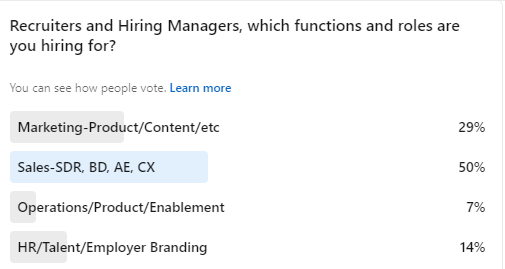
I surveyed my audience of Recruiters and Hiring Managers to which roles are they hiring.

Based on the answers Sales is the highest at 50 %.

image

Specific data on top jobs in demand can be found here.

How have you used marketing to build your talent and employer brand?

Share your thoughts.

Additional places to find my content and blog

WordPress: https://dangalante.me/

Tumblr: http://www.askdangalante.com/

LinkedIn: https://www.linkedin.com/today/author/DanGalante

Medium https://medium.com/@DanGalante

YouTube https://www.youtube.com/trendsettingsm

Anchor https://anchor.fm/dangalante

About Me

I’m a Strategic Marketer with Field Sales, Sales Enablement, Content Creation, and, Classroom Teacher/Trainer skill-sets using Marketing to drive Sales/Growth.

As a Marketer, I’ve worked with Start-Ups, a Political Campaign, and a Digital Marketing Conference.

I’m certified in Inbound Marketing with classes in Marketing, Product Management, Product Marketing, SEO, SEM.

Before teaching, I was an Outside Sales and Marketing Rep. selling and marketing dental products to Dentists using consultative selling, trade show marketing, field marketing, and market research.

I publish Sales, Marketing & Social Media Today a blog covering industry events and trends.

I’m seeking a full-time role in:

Inbound Marketing, Digital Marketing, Content Marketing, Product Marketing, Demand Generation, Social Media Marketing, Sales Enablement Enablement, Sales Strategy, Marketing Strategy, Employer Branding, Recruitment Marketing.

Open on title, industry, company, location, and level. Reach out on LinkedIn or at dan@dangalante.com to start a conversation.

Brands use Marketing to increase sales, and revenue, and to beat the competition. While this is a great strategy, a brand is only as good as its talent. Yes, brands compete to get and keep customers; but they are also competing to get and keep great talent. For brands to grow, they need great talent in every function of the business.

According to LinkedIn, “the number of global members who changed their jobs on LinkedIn was up 54% year over year. For context, those numbers typically hover between 0 and 5%. “

For brands to be able to attract top talent, they need to be a desired place to work. To be a desired place to work, they need to understand what motivates their employees. While this will vary by industry and company size there are similar things that many employees seek. These include:

1. Feeling valued for their contributions

2. Freedom to do interesting work and solve intriguing problems

3. Fair and competitive compensation including incentive and performance pay, perks, and other employer benefits

4. A fun place to work with activities to bond with co-workers

5. Training and advancement opportunities

6. Work-Life Balance

7. Flexible-working conditions ie work from home, remote work, hybrid work, or onsite for those who want to be in the office.

If these things listed above are in place, brands are on the right track to building a great talented brand provided their product offerings are solid.

Getting employees excited about coming to work each day will increase the talent pool by generating word of mouth. When people have something good they tell their friends.

Beyond the offline word of mouth, Brands need to own their identity online by in-sourcing their online and offline assets. This starts with their websites, digital properties, and the collateral used to sell their offerings. With talent branding and employer branding, brands are selling prospective employees the idea of applying and working for their company. This is similar to marketing their commercial offerings to potential customers.

Brands will need to conduct market research to understand who their competitors are and where they stack up in the talent market. Compensation, company culture, intelligence from applicants.

Information from this research can be used to develop a positioning strategy that can be applied to the talent brand and employer brand.

Every brand should have a career page on its website because this will reduce recruiting costs. This page should include the following:

  1. Pictures of employees from each function with a short bio and why they chose to work at the brand
  2. Employer Benefits and Perks offered
  3. Authentic Stories on Company Culture
  4. An application that is easy to fill out. i.e greenhouse.io or a form with a file for a cover letter and resume Greenhouse can be linked with LinkedIn.
  5. Social Sharing buttons for job postings

Company LinkedIn pages

In addition to sales, product, and content marketing, brands should use their LinkedIn page for talent and employer branding. Some companies’ talent and employer branding strategy are to post jobs on LinkedIn hoping candidates will apply. This is a missed opportunity to sell active and passive candidates on why they should work for your company. Today, candidates have many places they can work.

Things to include in a LinkedIn page

  1. Pictures of employees from each function with a short bio and why they chose to work at the brand
  2. Employer Benefits and Perks offered
  3. Stories on company culture
  4. An application that is easy to fill out. i.e greenhouse.io Indeed, Glassdoor, or a form with a file for a cover letter and resume Greenhouse can be linked with LinkedIn.
  5. Social Sharing buttons for job postings

Creating Engaging Job descriptions

The function head, Marketing, and HR need to collaborate to write job descriptions that convince applicants to apply, similar to copy-writing for commercial offerings.

Creating a Great Candidate Experience

Providing candidates with a great recruiting experience is key. Everything should be transparent to candidates. At the end of the recruiting process, it is important to solicit candidate feedback to refine and hone your recruiting process.

New Hire Onboarding and Reducing Turnover.

Make sure new hires feel welcome and are trained properly coordinating with the managers and functional heads of each department because roles had different needs and requirements for success.

Empowering and providing incentives to employees

Encourage employees to share company content and jobs on LinkedIn. Also, encourage employee referrals with incentives for referrals that are hired.

If you are not happy with the amounts of applications post the jobs on LinkedIn and Indeed to widen the applicant pools. Niche site may work as well.

This is how to use Marketing to build a great Talent Brand.

Who is hiring?

I surveyed my audience of Recruiters and Hiring Managers to which roles are they hiring.

image

Based on the answers Sales is the highest at 50 %.

Specific data on top jobs in demand can be found here.

How have you used marketing to build your talent and employer brand?

Share your thoughts.

Additional places to find my content and blog

WordPress: https://dangalante.me/

Tumblr: http://www.askdangalante.com/

LinkedIn: https://www.linkedin.com/today/author/DanGalante

Medium https://medium.com/@DanGalante

YouTube https://www.youtube.com/trendsettingsm

Anchor https://anchor.fm/dangalante

About Me

I’m a Strategic Marketer with Field Sales, Sales Enablement, Content Creation, and, Classroom Teacher/Trainer skill-sets using Marketing to drive Sales/Growth.

As a Marketer, I’ve worked with Start-Ups, a Political Campaign, and a Digital Marketing Conference.

I’m certified in Inbound Marketing with classes in Marketing, Product Management, Product Marketing, SEO, SEM.

Before teaching, I was an Outside Sales and Marketing Rep. selling and marketing dental products to Dentists using consultative selling, trade show marketing, field marketing, and market research.

I publish Sales, Marketing & Social Media Today a blog covering industry events and trends.

I’m seeking a full-time role in:

Inbound Marketing, Digital Marketing, Content Marketing, Product Marketing, Demand Generation, Social Media Marketing, Sales Enablement Enablement, Sales Strategy, Marketing Strategy, Employer Branding, Recruitment Marketing.

Open on title, industry, company, location, and level. Reach out on LinkedIn or at dan@dangalante.com to start a conversation.

Posted 218 weeks ago

Sales, Marketing & Social Media Today

I write about the three topics that I am most passionate about; Sales, Marketing and Social Media. These topics are covered from my experiences in outside sales and marketing. My objective is to use my expertise to help business and the individual.

8 Ways to Optimize Your LinkedIn Profile

image

A LinkedIn profile is a great opportunity to showcase who you are and what you can do for others. To effectively showcase yourself with your LinkedIn profile, you need to be able to tell a story that is credible and engaging. How do you tell a story on LinkedIn with your profile? There are 8 steps you need to take to optimize your profile for storytelling.

1. Creating a Great Headline

A headline is equivalent to the title of a book, essay, or story. The headline should be engaging. Like a story, the reader decides if they want to read more or move on. Using the automatic headline that lists your job title is a mistake. It is boring and makes you just like everyone else. It demonstrates that you lack creativity.

Your headline should be a short introduction showing how you help others in your current role. This is key if you are happily employed or if you are looking to advance in your current field. If you are looking to change careers, the title should demonstrate how you can take the skills and insights that you have developed and apply them to the career that you aspire to obtain. In other words, the headline should be able to answer the question “What are you looking to do or what do you want in your next role?” 

2 Uploading a Photo

image

LinkedIn profiles include large amounts of text. Similar to a story, text alone is not visually appealing. This is where a photo can help. When you upload a photo to your LinkedIn profile, your profile comes to life; similar to cover art on the front cover of an autobiography. Remember your profile is your story and brief career autobiography.

When you chose a picture, make sure that it is clear and makes you look professional.

3. Recording an introduction

LinkedIn also lets you record a 30-second introduction to your audience.

4. Crafting and Creating a Summary/Presentation

Your summary should reflect and expand on the headline. This is the place where you provide a brief overview that supports the headline, thesis, and title of your story. Your summary is a place to introduce yourself to your audience. It is important to keep your audience in mind. Put yourself in the place of the reader. Would you want to read your profile if the roles were reversed?

Once you introduce yourself, tell your story. Explain your background, where you are today, and where you want to be in the future. Make sure to include how your current skill set and experience have helped others and how these skills can be applied to a new role. When you list your work experience, make sure to back up your headline and summary. Think of this as your body paragraphs.

You can also share links to a digital portfolio, website, or whatever boosts your profile appearance.

5. Describing your work experience

As I mentioned above, the work experience section of your profile is the body paragraphs of your essay and story. It should be listed in chronological order. Each position that you describe should have specific examples of how you helped others in the role. LinkedIn also allows users to upload presentations and videos of their work. This can serve as a digital portfolio of your work that people can view. The next thing that I would do is obtain recommendations. You can also share your presentations from Slideshare on LinkedIn as well.

6. Obtaining Recommendations and Endorsements

A LinkedIn recommendation serves as proof that you have done excellent work in your position. These recommendations should be from coworkers, supervisors, and customers that you have served. They should serve as the conclusion to your story and essay where your claims are verified and validated. Recommendations should not be given away freely; doing that will undermine your credibility.

Endorsements are a quick way for someone to say that you are good at a particular skill without needing to write a recommendation. LinkedIn allows users to list up to 50 skills that connections can endorse.

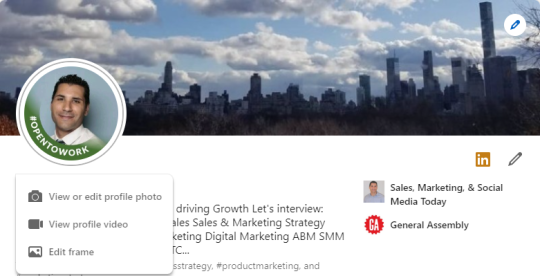
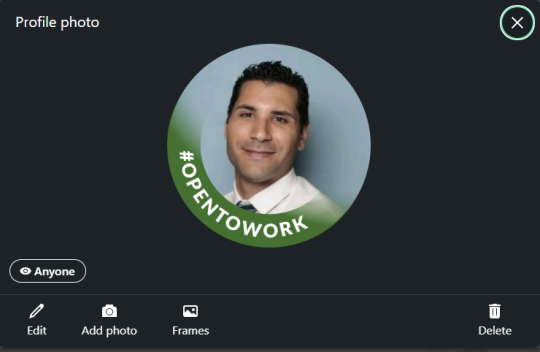
7. Open to Work/Open to Hire

image

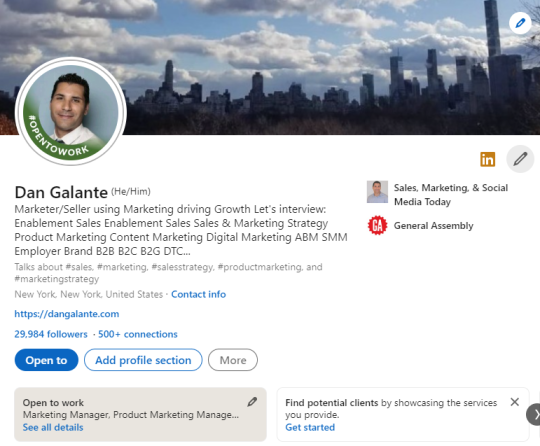
LinkedIn allows users to share if they are open to working or looking to hire. This is a nice addition to their job seeker and job posting experience. I am currently looking for work. 


image

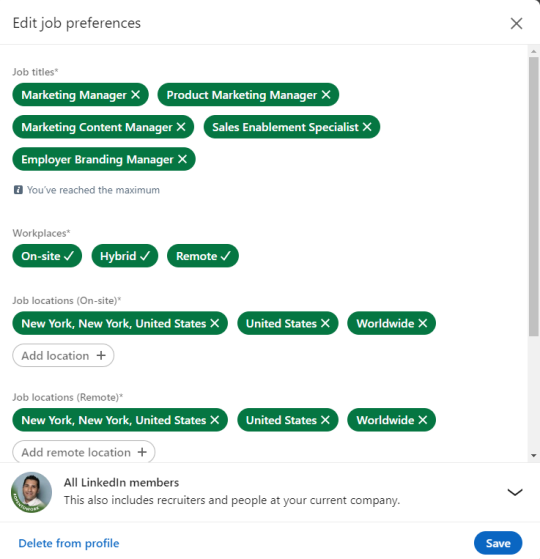
As you can see, LinkedIn allows you to list 5 job titles along with your desired work type location, etc. While I chose to make my job search public, LinkedIn allows users to make their open-to-work status visible to only recruiters to protect the anonymity of job seekers. 

image

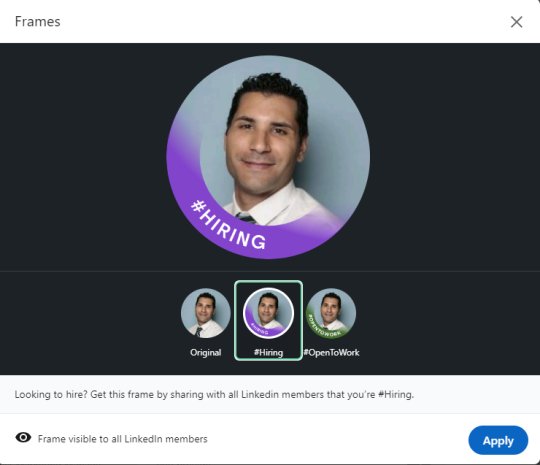
Recruiters and hiring managers can also share that they are hiring for roles by using the Open to Hire frame. 

8. Creator Mode

image

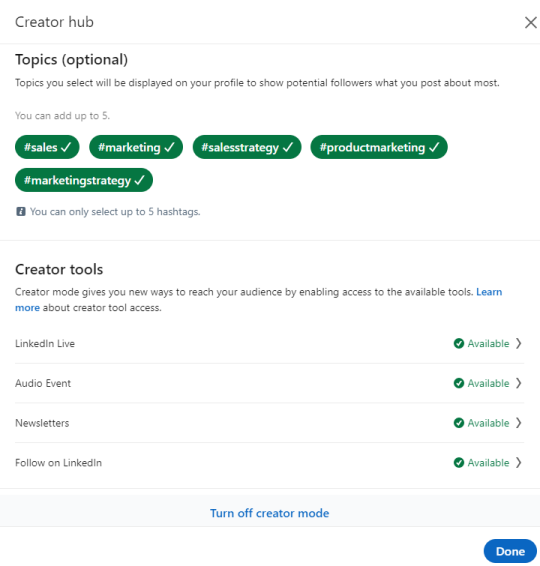
LinkedIn allows you to display 5 topics on your LinkedIn profile to show potential followers when you turn on creator mode. Creator mode also allows you to reach your audience in new ways with tools such as LinkedIn Live, Audio Event, Newsletters, and follow on LinkedIn.

Putting it all Together

Using these 8 steps will allow you to create a LinkedIn profile that can help you tell a credible and engaging story to potential customers and employers.

How have you used your LinkedIn profile to tell your story?

Share your thoughts.

Additional places to find my content and blog

WordPress: https://dangalante.me/

Tumblr: http://www.askdangalante.com/

LinkedIn: https://www.linkedin.com/today/author/DanGalante

Medium https://medium.com/@DanGalante

YouTube https://www.youtube.com/trendsettingsm

Anchor https://anchor.fm/dangalante

About Me

I’m a Strategic Marketer with Field Sales, Sales Enablement, Content Creation, and, Classroom Teacher/Trainer skill-sets using Marketing to drive Sales/Growth.

As a Marketer, I’ve worked with Start-Ups, a Political Campaign, and a Digital Marketing Conference.

I’m certified in Inbound Marketing with classes in Marketing, Product Management, Product Marketing, SEO, SEM.

Before teaching, I was an Outside Sales and Marketing Rep. selling and marketing dental products to Dentists using consultative selling, trade show marketing, field marketing, and market research.

I publish Sales, Marketing & Social Media Today a blog covering industry events and trends.

I’m seeking a full-time role in:

Inbound Marketing, Digital Marketing, Content Marketing, Product Marketing, Demand Generation, Social Media Marketing, Sales Enablement Enablement, Sales Strategy, Marketing Strategy, Employer Branding, Recruitment Marketing.

Open on title, industry, company, location, and level. Reach out on LinkedIn or at dan@dangalante.com to start a conversation.

Posted 193 weeks ago