How to use Marketing to Build a Top Talent & Employer Brand
Brands use Marketing to increase sales, and revenue, and to beat the competition. While this is a great strategy, a brand is only as good as its talent. Yes, brands compete to get and keep customers; but they are also competing to get and keep great talent. For brands to grow, they need great talent in every function of the business.
According to LinkedIn, “the number of global members who changed their jobs on LinkedIn was up 54% year over year. For context, those numbers typically hover between 0 and 5%. “
For brands to be able to attract top talent, they need to be a desired place to work. To be a desired place to work, they need to understand what motivates their employees. While this will vary by industry and company size there are similar things that many employees seek. These include:
1. Feeling valued for their contributions
2. Freedom to do interesting work and solve intriguing problems
3. Fair and competitive compensation including incentive and performance pay, perks, and other employer benefits
4. A fun place to work with activities to bond with co-workers
5. Training and advancement opportunities
6. Work-Life Balance
7. Flexible-working conditions ie work from home, remote work, hybrid work, or onsite for those who want to be in the office
If these things listed above are in place, brands are on the right track to building a great talented brand provided their product offerings are solid.
Getting employees excited about coming to work each day will increase the talent pool by generating word of mouth. When people have something good they tell their friends.
Beyond the offline word of mouth, Brands need to own their identity online by in-sourcing their online and offline assets. This starts with their websites, digital properties, and the collateral used to sell their offerings. With talent branding and employer branding, brands are selling prospective employees the idea of applying and working for their company. This is similar to marketing their commercial offerings to potential customers.
Brands will need to conduct market research to understand who their competitors are and where they stack up in the talent market. Compensation, company culture, intelligence from applicants.
Information from this research can be used to develop a positioning strategy that can be applied to the talent brand and employer brand.
Every brand should have a career page on its website because this will reduce recruiting costs. This page should include the following:
- Pictures of employees from each function with a short bio and why they chose to work at the brand
- Employer Benefits and Perks offered
- Authentic Stories on Company Culture
- An application that is easy to fill out. i.e greenhouse.io or a form with a file for a cover letter and resume Greenhouse can be linked with LinkedIn
- Social Sharing buttons for job postings
Company LinkedIn pages
In addition to sales, product, and content marketing, brands should use their LinkedIn page for talent and employer branding. Some companies’ talent and employer branding strategy are to post jobs on LinkedIn hoping candidates will apply. This is a missed opportunity to sell active and passive candidates on why they should work for your company. Today, candidates have many places they can work.
Things to include in a LinkedIn page
- Pictures of employees from each function with a short bio and why they chose to work at the brand
- Employer Benefits and Perks offered
- Stories on company culture
- An application that is easy to fill out. i.e greenhouse.io Indeed, Glassdoor, or a form with a file for a cover letter and resume Greenhouse can be linked with LinkedIn.
- Social Sharing buttons for job postings
Creating Engaging Job descriptions
The function head, Marketing, and HR need to collaborate to write job descriptions that convince applicants to apply, similar to copy-writing for commercial offerings.
Creating a Great Candidate Experience
Providing candidates with a great recruiting experience is key. Everything should be transparent to candidates. At the end of the recruiting process, it is important to solicit candidate feedback to refine and hone your recruiting process.
New Hire Onboarding and Reducing Turnover
Make sure new hires feel welcome and are trained properly coordinating with the managers and functional heads of each department because roles had different needs and requirements for success.
Empowering and providing incentives to employees
Encourage employees to share company content and jobs on LinkedIn. Also, encourage employee referrals with incentives for referrals that are hired.
If you are not happy with the amounts of applications post the jobs on LinkedIn and Indeed to widen the applicant pools. Niche site may work as well.
This is how to use Marketing to build a great Talent Brand.
Who is hiring?
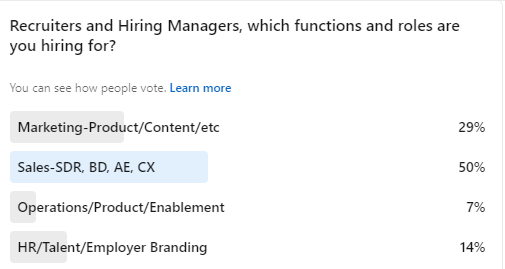
I surveyed my audience of Recruiters and Hiring Managers to which roles are they hiring.
Based on the answers Sales is the highest at 50 %.
Specific data on top jobs in demand can be found here.
How have you used marketing to build your talent and employer brand?
Share your thoughts.
Additional places to find my content and blog
WordPress: https://dangalante.me/
Tumblr: http://www.askdangalante.com/
LinkedIn: https://www.linkedin.com/today/author/DanGalante
Medium https://medium.com/@DanGalante
YouTube https://www.youtube.com/trendsettingsm
Anchor https://anchor.fm/dangalante
About Me
I’m a Strategic Marketer with Field Sales, Sales Enablement, Content Creation, and, Classroom Teacher/Trainer skill-sets using Marketing to drive Sales/Growth.
As a Marketer, I’ve worked with Start-Ups, a Political Campaign, and a Digital Marketing Conference.
I’m certified in Inbound Marketing with classes in Marketing, Product Management, Product Marketing, SEO, SEM.
Before teaching, I was an Outside Sales and Marketing Rep. selling and marketing dental products to Dentists using consultative selling, trade show marketing, field marketing, and market research.
I publish Sales, Marketing & Social Media Today a blog covering industry events and trends.
I’m seeking a full-time role in:
Inbound Marketing, Digital Marketing, Content Marketing, Product Marketing, Demand Generation, Social Media Marketing, Sales Enablement Enablement, Sales Strategy, Marketing Strategy, Employer Branding, Recruitment Marketing.
Open on title, industry, company, location, and level. Reach out on LinkedIn or at dan@dangalante.com to start a conversation.
Brands use Marketing to increase sales, and revenue, and to beat the competition. While this is a great strategy, a brand is only as good as its talent. Yes, brands compete to get and keep customers; but they are also competing to get and keep great talent. For brands to grow, they need great talent in every function of the business.
According to LinkedIn, “the number of global members who changed their jobs on LinkedIn was up 54% year over year. For context, those numbers typically hover between 0 and 5%. “
For brands to be able to attract top talent, they need to be a desired place to work. To be a desired place to work, they need to understand what motivates their employees. While this will vary by industry and company size there are similar things that many employees seek. These include:
1. Feeling valued for their contributions
2. Freedom to do interesting work and solve intriguing problems
3. Fair and competitive compensation including incentive and performance pay, perks, and other employer benefits
4. A fun place to work with activities to bond with co-workers
5. Training and advancement opportunities
6. Work-Life Balance
7. Flexible-working conditions ie work from home, remote work, hybrid work, or onsite for those who want to be in the office.
If these things listed above are in place, brands are on the right track to building a great talented brand provided their product offerings are solid.
Getting employees excited about coming to work each day will increase the talent pool by generating word of mouth. When people have something good they tell their friends.
Beyond the offline word of mouth, Brands need to own their identity online by in-sourcing their online and offline assets. This starts with their websites, digital properties, and the collateral used to sell their offerings. With talent branding and employer branding, brands are selling prospective employees the idea of applying and working for their company. This is similar to marketing their commercial offerings to potential customers.
Brands will need to conduct market research to understand who their competitors are and where they stack up in the talent market. Compensation, company culture, intelligence from applicants.
Information from this research can be used to develop a positioning strategy that can be applied to the talent brand and employer brand.
Every brand should have a career page on its website because this will reduce recruiting costs. This page should include the following:
- Pictures of employees from each function with a short bio and why they chose to work at the brand
- Employer Benefits and Perks offered
- Authentic Stories on Company Culture
- An application that is easy to fill out. i.e greenhouse.io or a form with a file for a cover letter and resume Greenhouse can be linked with LinkedIn.
- Social Sharing buttons for job postings
Company LinkedIn pages
In addition to sales, product, and content marketing, brands should use their LinkedIn page for talent and employer branding. Some companies’ talent and employer branding strategy are to post jobs on LinkedIn hoping candidates will apply. This is a missed opportunity to sell active and passive candidates on why they should work for your company. Today, candidates have many places they can work.
Things to include in a LinkedIn page
- Pictures of employees from each function with a short bio and why they chose to work at the brand
- Employer Benefits and Perks offered
- Stories on company culture
- An application that is easy to fill out. i.e greenhouse.io Indeed, Glassdoor, or a form with a file for a cover letter and resume Greenhouse can be linked with LinkedIn.
- Social Sharing buttons for job postings
Creating Engaging Job descriptions
The function head, Marketing, and HR need to collaborate to write job descriptions that convince applicants to apply, similar to copy-writing for commercial offerings.
Creating a Great Candidate Experience
Providing candidates with a great recruiting experience is key. Everything should be transparent to candidates. At the end of the recruiting process, it is important to solicit candidate feedback to refine and hone your recruiting process.
New Hire Onboarding and Reducing Turnover.
Make sure new hires feel welcome and are trained properly coordinating with the managers and functional heads of each department because roles had different needs and requirements for success.
Empowering and providing incentives to employees
Encourage employees to share company content and jobs on LinkedIn. Also, encourage employee referrals with incentives for referrals that are hired.
If you are not happy with the amounts of applications post the jobs on LinkedIn and Indeed to widen the applicant pools. Niche site may work as well.
This is how to use Marketing to build a great Talent Brand.
Who is hiring?
I surveyed my audience of Recruiters and Hiring Managers to which roles are they hiring.
Based on the answers Sales is the highest at 50 %.
Specific data on top jobs in demand can be found here.
How have you used marketing to build your talent and employer brand?
Share your thoughts.
Additional places to find my content and blog
WordPress: https://dangalante.me/
Tumblr: http://www.askdangalante.com/
LinkedIn: https://www.linkedin.com/today/author/DanGalante
Medium https://medium.com/@DanGalante
YouTube https://www.youtube.com/trendsettingsm
Anchor https://anchor.fm/dangalante
About Me
I’m a Strategic Marketer with Field Sales, Sales Enablement, Content Creation, and, Classroom Teacher/Trainer skill-sets using Marketing to drive Sales/Growth.
As a Marketer, I’ve worked with Start-Ups, a Political Campaign, and a Digital Marketing Conference.
I’m certified in Inbound Marketing with classes in Marketing, Product Management, Product Marketing, SEO, SEM.
Before teaching, I was an Outside Sales and Marketing Rep. selling and marketing dental products to Dentists using consultative selling, trade show marketing, field marketing, and market research.
I publish Sales, Marketing & Social Media Today a blog covering industry events and trends.
I’m seeking a full-time role in:
Inbound Marketing, Digital Marketing, Content Marketing, Product Marketing, Demand Generation, Social Media Marketing, Sales Enablement Enablement, Sales Strategy, Marketing Strategy, Employer Branding, Recruitment Marketing.
Open on title, industry, company, location, and level. Reach out on LinkedIn or at dan@dangalante.com to start a conversation.